Lalbagh
Lalbagh Botanical Garden is located in Bangalore and is nationally and internationally renowned centre for botanical artwork, scientific study of plants and also conservation of plants. A haven for all nature lovers, Lal Bagh covers an area 240 acres in the heart of the city and has nearly 1,854 species of plants. It was commissioned by Hyder Ali in 1760 and completed by his son Tipu Sultan. The garden features rare plants of French, Persian and Afghani origin and has attained the status of a Government Botanical Garden. The Lal Bagh Rock which is over 3000 million years old is found here and is a major tourist attraction.
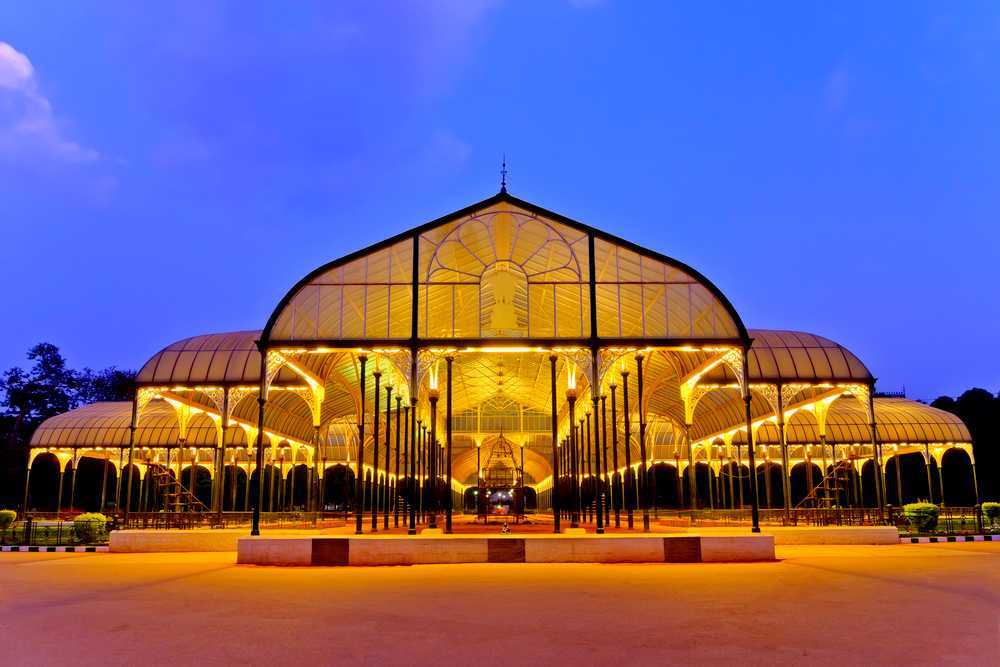
This botanical garden, a delight for photographers, also consists of the famous glass house where an annual flower show is held every year and is also a home to an aquarium and a lake. Tipu Sultan brought in imported trees and plants from countries all over the world and planted them here and today, Lalbagh Botanical Garden has one of the world’s largest collection of rare plants. In addition to being rich in foliage, this garden also houses a number of birds such as Myna, Parakeets, Crows, Brahminy Kite, Pond Heron, Common Egret and Purple Moor Hen.
History of Lal Bagh
Referred to as Rose or Cypress Garden up till 1856, this garden was commissioned by Haider Ali in 1760 who was a big admirer of Mughal Gardens and wanted to set up one in his own city as well. He was influenced by his father who used to work for Dilawar Khan, a viceroy of the Mughals and was especially passionate about setting up gardens. The garden is modelled on another one that existed in Sira which was situated 120 km away from Lalbagh. Over the years, many species of rare plants, trees and shrubs were added to Lalbagh and most of these were added by Tipu Sultan himself.The garden area stood at 45 acres in 1874 with major additions done in 1889 (30 acres) and 1891 (94 acres). The foundation of the famous Glass House was laid down in the year 1898 and was further built by John Cameron in the image of London’s Crystal Palace.
Flowers at Lalbagh
Since its very inception, the caretakers of the garden have ensured a vibrant and flourishing plant variety by continuously adding to its collection. Even in the medieval times, the rulers imported plants from far-flung places like Persia, Cape Town, Kabul, Turkey, Mauritius etc. Exotic species from around the world are curated, introduced, acclimatised and further multiplied resulting in a stock of 1854 species which continues to grow. Some of the exotic plants here include Amherstia Nobilis, Adansonia digitata, Ficus bengalensis var – krishnae, Araucaria Cookie, Bombax Ceiba, and Dillenia Indica among many others. The presence of these plants elevates the beauty of this place to another level, making it one of the most important horticulture hotspots in the country.
Tips For Visiting Lal Bagh
Best time to visit is during the Flower Shows in January and August. Morning or evening hours are ideal for a relaxing outing to this place.
1. Pedestrians can enter the flower show from any of the 4 gates.
2. You can buy the tickets to the flower show online at official website.
3. There are cloak rooms at each entrance of the Lalbagh Botanical Garden.
4. Plastic disposable bottles are not allowed
How To Reach Lal Bagh
Located in the southern part of the city, Lal bagh Gardens can be easily reached by the local means of transport such as buses and auto rickshaws. You can hire cabs to this place as well.